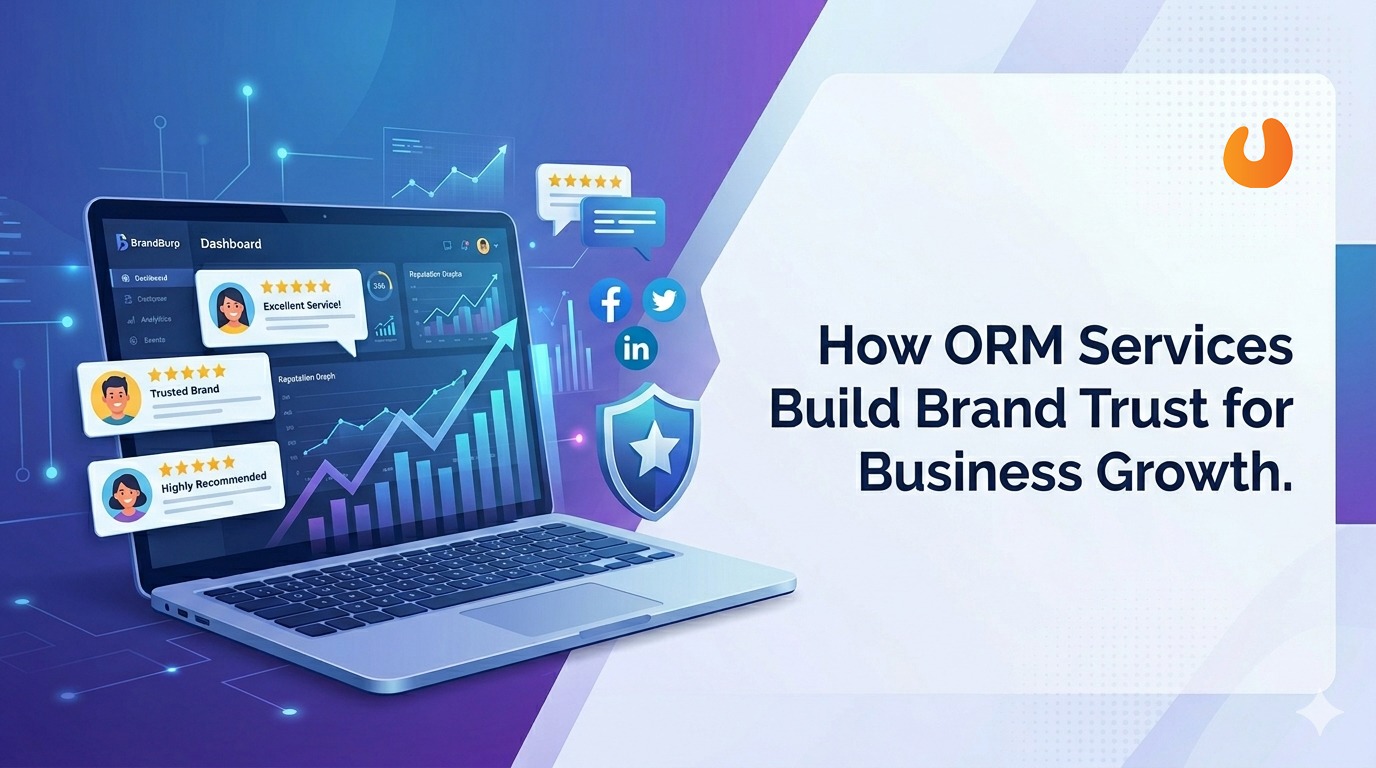
The most powerful tool in the hands of a company in the high-stakes game of digital commerce is its image. With consumers virtually basing their decision-making process on search engines and social feeds, the role of BrandBurp in how these narratives are formed becomes crucial. The main element in a contemporary growth strategy is ORM services, which is an advanced methodology aimed at making sure that by the time the world gazes at a business, it sees a mirror image of excellence, reliability, and transparency.
Any transaction is based on trust. In a globalized world, however, trust is also very fragile. With professional ORM services, businesses can go beyond merely damage control and start the proactive task of creating a fortress around their online identity. This is a long-term commitment to visibility and integrity that distinguishes market leaders and those that simply live.
The internet has actually killed the aspect of individual error. In the case of any contemporary business, the brand reputation management serves as the major defense against the unpredictability of the online mood. It is no longer sufficient to deliver a good service; being able to control the digital reverberations of that service is also needed. The failure of one bad search will be a lasting repellant to a prospective customer, and a reputation management agency is the key to keeping the sales funnel healthy.
A business can be confident of maintaining a positive online presence by undertaking thorough ORM marketing, making sure that its online presence reflects only the best about the company. It is not a matter of trying to take away the fact but rather making sure that the first things a searcher will know about the business are its innovations, its contribution to the community, and its success stories. By a brand becoming the owner of its brand reputation management, it is basically stating that it is the company that owns it and not the critics.
Orm marketing is made up of an in-depth examination of the technical and psychological factors of how individuals perceive information over the internet. It also necessitates an understanding of search engine mechanics to make the digital front door of the company neat and appealing. By implementing a variety of ORM strategies, a brand is in effect insuring against misinformation and prejudice on a long-term basis.
A dedicated reputation management agency is not a matter of responding to issues; it creates a reputation reserve. This is a treasure trove of good material, press statements, and third-party recommendations that acts as a buffer in the times of crisis. Through these ORM strategies, a firm is guaranteed that the voice of a single discontented customer will not be heard over a thousand contented customers. The psychological effect of the appearance of a wall of positive outcomes is immeasurable; it gives the consumer a feeling of security.
The 21st-century town square is social media. It is the place where brands are humanized, and it is the place where they are most exposed. A 24/7 effort is required to ensure an excellent social media reputation. It entails hearing the community, empathizing with the feedback, and turning negative conversations into chances of resolving them publicly.
When a company is able to control its social media reputation, it shows that it has a certain degree of accountability that modern consumers can relate to. Consumers gravitate towards listening brands. Nonetheless, the overwhelming number of social interactions can be daunting. That is why a great number of prosperous companies delegate this activity to specialists who can implement similar ORM techniques on different platforms so that the brand voice may be used professionally and beneficially. One viral post with proper treatment by a reputation management agency can in fact gain more brand loyalty than a normal advertisement could ever do.
The hospitality sector is possibly the best illustration of the relationship between revenue and online sentiment. Hotel reputation management is a professional business in which the stakes are counted in terms of occupancy rates. One negative comment posted on cleanliness or service in this industry can ruin a season of profits.
Hotels can easily enhance their ratings using certain ORM techniques designed with traveling in mind, like active-review requests and quick-response measures. Hotel reputation management makes sure that the best qualities of the property are brought to the limelight while dealing with the concerns of the guests in a manner that demonstrates to the prospective visitors that the management is keen and committed to making changes. The absence of regular hotel reputation management means that even the most luxurious hotels may be overshadowed by the rivalry that is more prolific in terms of its online presence management.
Confidence is an outcome of growth. A customer purchases when he/she is assured of a brand. An investor funds when he or she is confident. An employee can and will produce when he is confident. That confidence is designed by a reputation management agency such as BrandBurp.
These agencies are able to keep the brand at the top of the competition by using ORM marketing. In a competitive marketplace, a better social media reputation or a cleaner search profile can be the tie-breaker that causes a consumer to select one company over the other(s). As such, ORM services must not be considered a cost fringe but rather a major market share driver. Reputation management agencies are often regarded as having a payback on their hiring through lower costs of customer acquisition and higher lifetime values on an individual client.
With the further advancement of artificial intelligence and automated content, the authenticity of the professional ORM services is going to be more appreciated. Consumers will seek brands that have a proven positive track record. Those who have not taken care of their brand reputation will be left in a tangle of competing with those who have employed a reputation management agency to create a clear, honest, and compelling online story.
The growth of ORM marketing into the new digital spaces implies that ORM strategies have to evolve further. Voice search optimization, managing it in the metaverse, and so on, the principles of corporate reputation management will not change: be present, be positive, and be professional. To individuals in the hospitality sector, management of hotel reputation will always remain the heartbeat of their success, as they must remain on the alert and strive to ensure the satisfaction of their guests.
The online realm is mean, yet it is also ripe. The internet is an effective growth engine for businesses that are serious about managing brand reputation. Using ORM services, firms are able to make sure that they are not the victims of the online story but the masters of the same.
Whether it is the complex task of hotel reputation management or the wide-brush approach of corporate reputation management, the same objective is to create a brand that people will have faith in. Any business can make the Internet its best competitive advantage in collaboration with a competent reputation management agency such as BrandBurp.
1. What are the fundamental advantages of professional ORM services?
The main advantages are the growth of consumer trust, better visibility in the search engines, and a more robust brand image. Businesses can control the way news looks on the Internet to make sure that the positive news and reviews prevail over the negative or misleading information.
2. What does a reputation management agency do with bad reviews?
An agency is professionally oriented toward engagement and resolution. They assist brands to react to criticism in a positive, caring way, as well as put in place measures so that satisfied customers can share with others their positive moments, which will go a long way in enhancing the overall rating.
3. Why is social media reputation important in the growth of the business?
Consumers usually start their brand interaction with social media. A good social media reputation creates community and loyalty, and therefore, the introduction of new products is easy, and a constant flow of referrals can be ensured.
4. Do B2B and B2C companies have different corporate reputation management?
Although the platforms may vary, the purpose of corporate reputation management is the same: to build authority and trust. B2B businesses can invest more in business-oriented platforms such as LinkedIn, whereas B2C businesses can invest in general consumer platforms and review websites.
5. What is the timespan of seeing results of ORM strategies?
The time frame will depend on the present level of the brand in terms of its online presence. Though the changes in social media may be noticed within a short period, the search engines may require several months of effort to demonstrate the tangible change in the story.