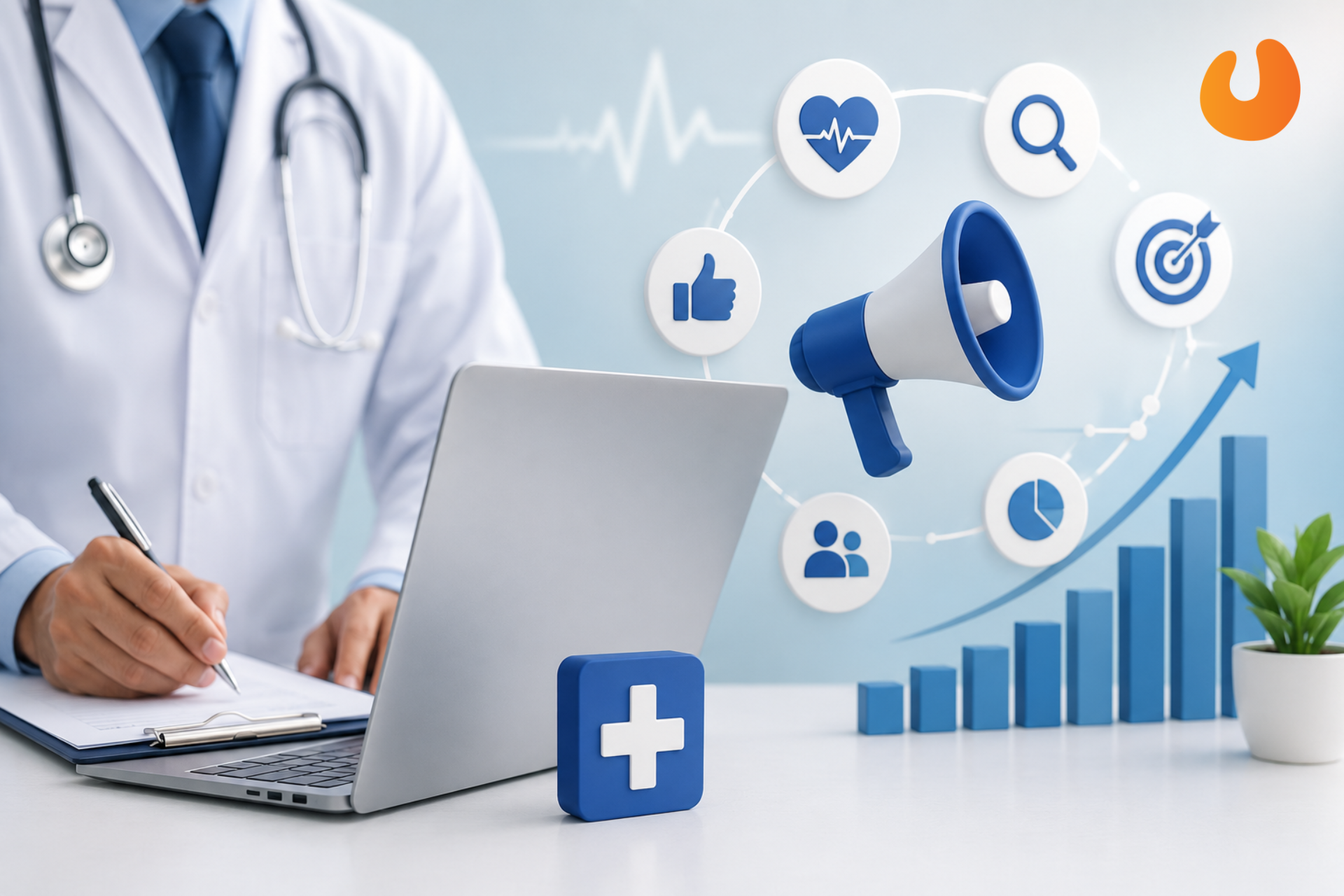
Healthcare is a massive industry facing big change through digitalisation. The days of having a practice, hospital or diagnostic laboratory that got customers through only word of mouth or by listing in a long-established local phone directory are long behind us. These days, the first thing that comes to mind when patients present with a bizarre symptom or a new diagnosis or when they see a doctor they haven’t been to before is opening a search engine on their cell phone.
The strategic need to establish an online presence has become a life necessity for the medical technology industry, private practices, dental offices and hospitals. While a healthcare company is subject to strict regulations in its digital marketing, it’s also important to balance informative and high-quality content that is directly addressing patient concerns while keeping a highly professional attitude.
With precision digital strategies, medical businesses can effectively connect clinical skills to the target group that requires this clinical help the most.
Just like consumers in retail or hospitality or with digital banking, modern consumers expect the same user experience with medical care. They do their homework, compare plans, read reviews and demand a perfectly seamless experience with digital services.
A significant share of the internet traffic is people looking for health conditions, intricate symptoms, drug side effects and revolutionary treatment. Patients want to be informed before they ever step foot into a consultation room. That patient is likely to find a competitor with a website that answers those initial questions if the health care provider’s one doesn’t.
Before visiting the doctor’s office, patients communicate with digital testimonials, patient success stories, and star ratings on Google Business Profile. No matter how qualified an office may be, it will be hard to turn digital traffic when the reputation of the medical practice is poor or it does not have recent reviews. A practice that is poorly reviewed or has a poor medical practice reputation will have a hard time converting digital traffic, even if the doctors are extremely qualified.
Geographic boundaries are actively blurring as virtual consultations and remote monitoring continue to grow in importance. Today healthcare organisations play not only against the common competitor, the clinic just down the road, but also on a digital, global and regional level. To reach this new, digital-first audience, companies need to adopt a holistic approach to healthcare digital marketing that emphasises patient education, visibility and the ability to easily access digital content.
Creating a sustainable, efficient website and presence is a combination of several related actions. A disorganised marketing strategy is a disorganised strategy and results, and thus a strategy that encompasses the whole is absolutely essential in order to obtain profits.
Whether a patient is looking to book a surgery appointment or must search for a specific treatment, procedure or their local specialist, the SEO can guarantee that the provider’s web page will rank at the very top of the search engine results page. This involves refining for accurate nearby searches (e.g., “paediatrician near me”) and constructing strong, technically suitable, and extremely accurate medical content that fulfils search engines’ quality algorithms.
In the healthcare industry, content goes beyond just promotion to educating, comforting and reassuring. Staggering amounts of high-quality blogs and downloadable patient preparation guides plus authoritative articles provide unmistakable clinical authority. Content for digital marketing campaigns in health care portfolios should always have clinical evidence, simple language and expert medical review for absolute safety and credibility.
Social media is a platform with the potential of humanising the medical brand in ways that have never been possible. Evidence-based wellness tips, staff examples of success, eulogies on medical advances and patient recovery stories (no matter the type or with written, explicit permission) help to remove the taboo from medical procedures and build a strong, engaged presence around the brand.
Medical organisations need to adopt complex, multi-channel strategies to cut through the noise and noise immunity in an increasingly noisy and competitive online space. No longer can static websites and infrequent, suboptimal social media posts claim share in today’s market.
Video is still one of the most effective methods for quickly imparting human trust. You can connect well with viewers by using good video tour clips for sterile facilities, showing interviews with board-certified personnel who describe complicated procedures, and including upgraded visuals with patient testimonials of recovery. In healthcare, trust is the most valuable resource, and video is a better form of education for this currency than a written document.
Organic SEO can create digital equity over a long period, typically months, while paid search (pay-per-click) ads provide quick short-term visibility. A clinic, or hospital specialising in a specific treatment, can increase the likelihood of conversion by working its way to the top of search pages, especially those ranked for high-intent queries like informational and comparative results, when a patient needs immediate or specialised medical treatment.
One negative, unresolved review can have an adverse effect for months; that really is patient acquisition. Handling online reviews proactively, engaging in a professional tone on feedback, and encouraging positive feedback from happy patients are considered crucial parts of the contemporary medical digital marketing systems.
Marketing for medicine is restricted by very tight regulations and is subject to ethical, legal and operational considerations, which are nonexistent in generic commercial or retail operations. These mistakes can lead to grave legal repercussions, loss of medical licensure and tarnished brand reputations.
By working with a healthcare marketing company that has an in-depth, sophisticated understanding of healthcare marketing regulations and requirements, all promotional materials, creative efforts and tracking systems will be fully compliant with regional healthcare laws while maximising market penetration and patient growth.
Attaining measurable and sustainable success in the medical niche demands advanced knowledge of not only advanced digital growth strategies but also the complex healthcare regulations. BrandBurp offers a niche, ethical method for scaling medical brands in a reliable, quick and efficient manner.
Q1. Which is the main advantage of digital marketing to healthcare businesses?
A1. The primary advantage is that they can engage patients at the moment their care is needed most. Since the years of Google’s personalized search, the practices that appear at the top when people search for specific symptoms, procedures or treatments potentially have excellent patient leads, encourage more interactions and bolster trust for a long-term customer base.
Q2. How does a healthcare marketing agency guarantee that they’re compliant?
A2. A specialised agency remains informed with the medical advertising rules and privacy regulations applied in the region. They enforce rigorous legal procedures, safeguard information use on websites, and medically review all copy, taking care that it doesn’t have any unlawful, exaggerated or misleading claims.
Q3. For medical practices and clinics, why is local SEO so important?
A3. Patients choose a GP within a convenient geographical location; primarily, the vast majority of people do. When properly optimised for local search, a practice will have a higher ranking and appear in local map packs so that local patients looking for accurate directions, numbers, and hours of operation can easily find it.
Q4. What is the time to get benefits from health care digital marketing?
A4. Paid advertising (PPC) can generate online presence and patient enquiries within days, whereas the efforts put into organic strategies such as SEO and a full content marketing event are likely to take a minimum of 3-6 months to observe meaningful and long-term ranking enhancements and regular organic traffic increase.
Continuous innovation in medical technology and digital media offers tremendous opportunities for organisational development, public health initiatives and better care for patients. Medical institutions that prioritise forward-looking and thorough marketing strategies will be able to fill the gap between clinical knowledge and the ones in need of it, permanently.
The best marketing in this arena is based neither on the aggressive sales approach nor on a retail-style promotion, but on providing clear, accessible, and trusted information with which to make informed, confident choices about patient health and well-being. It is important to liaise with people that grasp this distinction so that health systems can be at ease and entirely focus on what truly matters most: exceptional patient results.