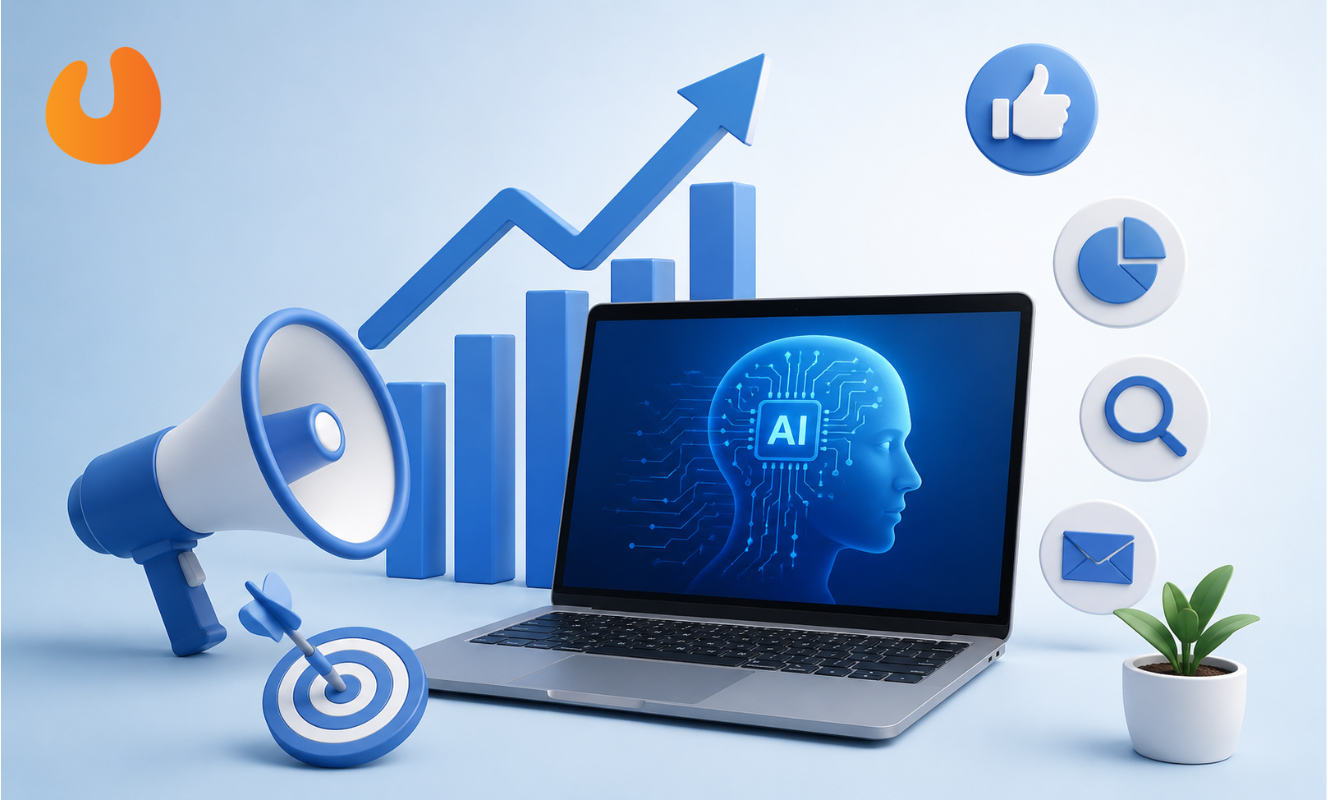
In certain areas, the global market is advancing more quickly than traditional marketing approaches. Relying solely on traditional manual optimizations can quickly cause enterprises to fall behind when they aim to scale. Whether detecting the fallout from a delayed response or not, there’s a need for real-time data analysis, predictive consumer modeling, and constant campaign fine-tuning. The only way to reach these objectives at scale is by adopting a different approach to growth, which is more automated and intelligent. A top AI digital marketing company, such as
BrandBurp is no longer a mere replacement; it’s an integral part of business requirements. At the heart of this digital transformation is the powerhouse that is BrandBurp, using cutting-edge machine learning and industry-proven marketing strategies to sprint to do whatever it takes to boost corporate growth. Reaching customers across the globe, businesses can adapt their data models and incorporate modern tools for their day-to-day communications, thereby integrating the best of all with the elimination of guesswork and reduction of customer acquisition expenses.
These days, to win over consumers in the modern company way would take a modern approach. Traditional agencies tend to take weeks to assess past performance and make adjustments. In contrast, an advanced agency uses real-time data analysis to fine-tune what’s running in real time. With the help of AI in digital marketing, modern brands can quickly sift through terabytes of valuable user data to identify patterns in consumer behavior that were previously undiscovered and predict what customers are likely to do next.
But when you decide to outsource your needs to an established AI digital marketing company, you don’t just outsource your day-to-day creations. This involves implementing predictive algorithms that can simulate, analyze, and depict various user journeys across multiple channels, allowing you to identify precisely where the next dollar invested in ads will yield the highest return on investment (ROI). Whether it’s on international e-commerce websites or local services, AI plays on an equal field, moving business expansion from an uncertain art to an actual science based on data.
For years, pay-per-click (PPC) marketers have been suffering from the “natural” risk of a rapidly depleting budget as well as a lack of optimized targeting. With standard setups, the use of static keyword lists and manual bidding schedules do not account for the critical changes in behavior from prospective buyers. Latest performance marketing resolves this issue with the help of Ai-powered ad campaigns that dynamically adjust targeting parameters depending on the live user intent indicators.
Intelligent Bidding and Real-Time Targeting
Today’s advertising networks can deal with millions of contextual signals flowing by every second, such as time of day, what device people are using, searching on their previous pages, and so on. Rather than making fixed bids, each time brands use AI-based PPC strategies, they recalculate the optimal bid value for each search impression. This ensures that the marketing budget is not spent on low-value traffic only on higher-intent ones who are most likely to convert.
Dynamic Ad Personalization
Variation of creatives is another area automated platforms streamline. AI can be used to generate hundreds of ad variations for testing without manually having to test three or four static ad headlines. These tools increase click-through rate by matching unique ad copy with the individual that is searching. Brands often have to buy in specific PPC services that utilize a neural network to constantly tweak copy, page layout, and placement with various ad networks to get these advanced features.
As one of the largest changes in search engine optimization to occur since its dawn, it affects everyone involved in the field. Consumers no longer search the web in two-word phrases with the advent of new technologies like generative search engines and conversational AI bots. They’re posing them complicated mutually understandable questions, and search algorithms are evolving to recognize intent, not necessarily to simply perceive a proper keyword match.
In order to sustain organic market share, companies need to think outside the box with regards to on-page optimisation and content. Specialised AI SEO services use AI to help brands organise website content, making it easily understood by traditional search crawlers and the latest large language models. The structural alignment guarantees that a firm’s electronic properties are utilised as the definitive source in answer to advanced purchaser queries.
In addition, the way of doing well on the web has stretched into the realm of speaking to platforms. One of the key outcomes businesses seek is to know how to rank for AI search engines, resulting in items clearly recommended by conversational digital helpers. This level of visibility is only achieved with contextual relevance, for which you need to build deep authority, use clean semantic schema marking, and continue a digital reputation that can be easily accepted and recognised by machine-learning algorithms.
Entering a new market abroad is not something that’s easily done by just walking in. It’s essential to have a robust technological solution to scale an enterprise globally and significant market expertise. Building upon the basics of creative agency functioning, BrandBurp created its full-service model to shift the focus from the traditional way of doing creative and introduce an organisational structure that concentrates on technical innovation, direct responsibility, and constant growth.
Brand Burp works as a holistic brand system; rather than running each department as an individual unit, it centralises all aspects of a brand’s digital presence. Not only does technical SEO directly inform paid advertising parameters, but what is learned through behavioural data from conversion tracking directly informs the creative process. This streamlined approach ensures that there is a minimum in data gaps and that all marketing channels are orientated towards the same business objectives.
Unlike off-the-shelf automation software, which lacks customisation and fails to properly account for context in general and software vulnerabilities in particular, BrandBurp uses a collection of proprietary machine learning frameworks. Custom predictive data models enable the use of deeper, more practical insights from live audience data with the help of BrandBurp. This structural benefit helps brands boost their performances quickly when they compete with others operating conventional, manual marketing methods.
Trying to address new global markets implies dealing with different consumer behaviours, different search patterns and different purchasing patterns in different regions of the world. BrandBurp fuses the worldwide capability of data monitoring with exact and extremely targeted audience segmentation. It guarantees that any cross-border marketing efforts are seamlessly translated into native markets while still appearing locally relevant and driving global conversions
Q1.What is the set difference between an AI digital marketing company and a normal marketing company?
A1. The traditional agency model uses mostly past data and periodic manual optimisations, and these are not scheduled until a few days or even weeks after they’re reviewed. An intelligent agency uses real-time machine learning algorithms to monitor live traffic data all the time, adapt bidding strategy on the fly, fine-tune ad creatives and remediate conversion friction as it arises.
Q2.Why is the ranking important in AI search engines for brands?
A2.Traditional SEO emphasises the amount of blue links to a website. Today, SLR is based on a large language model that provides a conversational summary to user question statements. Knowing how to get to the top of AI-driven search results ensures that a business is a recommended source for organic traffic, especially if it appears within the answers given by the AI.
Q3. Is it possible to supplement live-Pay advertising with AI SEO services?
A3. Yes. The knowledge that tease-distilling AI SEO services provide, like strategic keywords such as commonly used phrases and the latest user search habits, will immediately be channelled to running paid search campaigns. This sharing makes it easy to create more relevant ads, cut down on your CPC rate, and deliver your message uniformly throughout your paid and organic ads.
Q4. What impact does AI conversion rate have on ROAS?
A4.The optimisation process doesn’t apply to all the website visitors: it tailors the elements on the page, headlines and user path depending on different markers. Its customisation option ensures visitors are converted for their intent, maximising the ROAS for all existing marketing campaigns.
Q5. How is a digital marketing agency for insurance better at combining AI?
A5. The insurance industry has some of the longest and complex sales cycles and high acquisition costs among all businesses. Advanced agencies can do so and track accurate consumer life-stage and intentional markers, thanks to machine learning models. This enables enterprises to present extremely tailored information to potential buyers at the right time, reducing ad waste amidst an intense market area.
Receiving legacy marketing processes in an internet rapidly evolving setting is an unneeded threat in any operational procedure. For sustaining enterprise growth, there should be a learning, adapting and self-correcting system that keeps pace with changes in consumer preferences. For modern enterprises, using automated data analysis, dynamic ad variations and semantic content architectures means they can weather the demands of changing search layout and platform rules.
By collaborating with an elite AI digital marketing company, businesses can get access to the technical infrastructure needed to implement multi-pronged digital marketing plans on a worldwide scale. By selecting BrandBurp, companies get an advanced set of forecasting instruments, refined Digital Marketing services, and custom development plans to refine naively gathered web information into predictable, scalable cash. There is a future for global commerce and it belongs to brands who are using algorithmic insight and the best blueprint for this is through intelligent automation.