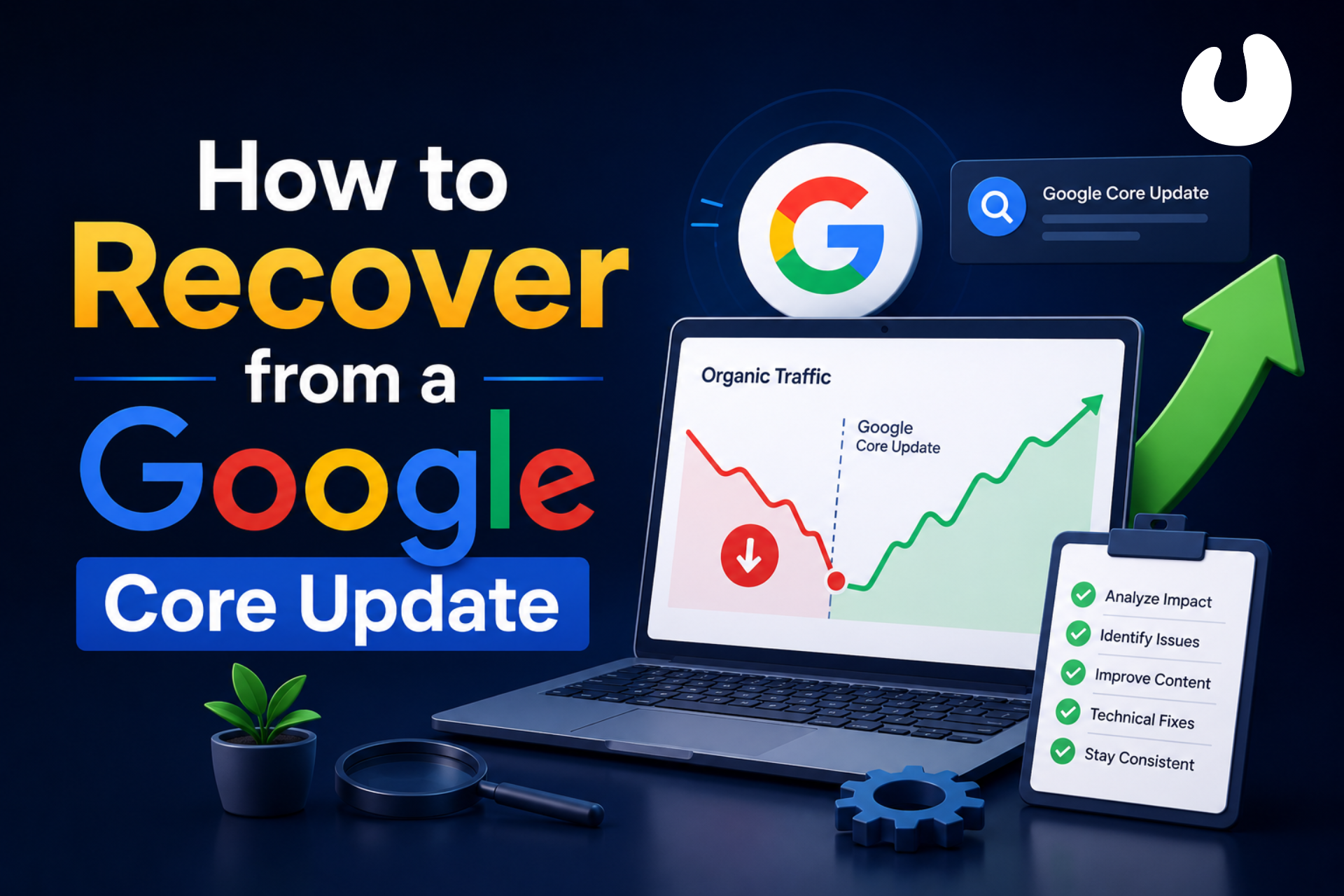
For many website owners, a significant change in algorithm means panic mode. Sudden plummeting positions can result in uncoordinated and hasty adjustment efforts that fail to always successively boost positions. True Google Core Update recovery is not the manipulation of getting a shortcut to this or getting a trick for it. Rather, it is a comprehensive, in-depth analysis of the overall quality, user-centric satisfaction, and content relevance of a website.
In order to create a solid road back to visibility, a website should undergo a number of steps, starting by checking the exact dates of traffic declines, reviewing content thickness and user experience, restructuring any thin content, and watching what happens to the platform over many months.
The initial step in the recovery from a change is to check just what is damaged. Owners of websites may want to examine Google Search Console and Google Analytics to find out exactly when traffic has dropped.
No core update will punish a site for things that are just one-off bugs. Rather, it reconsiders the significance that the location affords to the actual human beings. There is a high level of evidence that shows content is any substance that fulfills Experience, Expertise, Authoritativeness, and Trustworthiness (EEAT).
Assess how easy a website is to navigate, which is highly valued by modern search algorithms. Slow page loading speed, annoying pop-ups, and site layout issues on mobile devices could impact website performance during a website evaluation. Clean site architecture, speedy Core Web Vitals, and a mobile-friendly site are essential to ranking changes in your site.
Algorithm changes by search engines are complicated, and without a deep understanding of the intricacies of their algorithms, you may struggle with them enormously. Brandburp gives an information-centric, holistic digital marketing solution for expanding brands and making sure they are visible online for the long term.
A complete Google Search ranking recovery can take time, typically months, as the search spiders crawl back and re-index/re-evaluate an entire site. It’s important to be consistent during this waiting time. Businesses shouldn’t make constant changes week after week—they should make a single, sweeping change and let the search engine do its work to register the improvements.
This resource-intensive process can be streamlined by working in conjunction with professional SEO services. Professionals can pinpoint depth gaps and correct any potential technicalities and construct a powerful backlink campaign that meets current search conditions.
In the end, the key to surviving a Google algorithm update is to cease optimizing solely for search engine bots and put 100% effort into creating the best resource for your end user. If the website is useful, clear for users, and boasts credible information, its website authority will also get maintainable visibility.
It can be a difficult problem to readjust to new search visibility levels, but it can also be a valuable diagnostic tool. The recovery process starts by maintaining a long-term quality-focused perspective toward the business’s marketing in order to counteract Google Algorithm Update effects. A website can regain its authority by continuously monitoring its performance metrics, improving its content, optimizing its site experience, and collaborating with industry professionals. Patience, Authenticity, and consistent value are the hallmarks of success on the digital marketplace, principles at the core of a recovery strategy which help bring a website stronger and more stable than when it started into the fold.
Q1. How long does it typically take to recover from a core update?
A1. Unlike almost every other aspect of a website, it’s impossible to predict the recovery time for any site given the magnitude of the changes that need to be made. Typically, this will require between three and six months. Search engines generally require a positive trend over a longer period of time for a website’s quality metrics until it has been released by the next major updates.
Q2. If a website falls in rank, doesn’t this imply it did something wrong?
A2. Not necessarily. A drop in case of a major update is not always a webpage that has broken search rankings or engaged in spamming techniques. In many cases, it reflects that another site has released new material or even enhanced its website interface, which makes the other pages more relevant to the user’s search.
Q3. Can there be technical reasons for losing traffic while updating?
A3. Yes. Technical performance is part of user experience, and although these updates are more about content quality and relevance, the technical element plays a key part in this. In the instance of an algorithm update, a drop in rankings can be exacerbated by factors like slow loading speeds, weak mobile rendering, broken links, etc.
Q4. Should it be entirely removed if it is thin or poor quality?
A4. While pruning content may be beneficial, deletion should not be done automatically. Sometimes, it’s better to improve the information content, add insight from experts, and incorporate it into other similar pages instead of taking the entire page down.